mistakes-ga7ae2517b_640

How to Stop Being a Perfectionist

If you have very high standards for yourself and others, and find that these standards are rarely met, you could be ‘suffering’ from perfectionism.

Perfectionists cannot tolerate mistakes and typically want whatever they do to be flawless. They have a highly active inner critic who is constantly berating them for making mistakes, even the smallest one.

They are also intolerant of other’s mistakes and may end up constantly nagging and criticising the people they live and work with.

While it’s good to have high standards, if these standards are unrealistic and never attained, you will be in a constant state of stress and negativity. This is certainly not good for your mental and physical health, nor is this good for your relationships which will suffer because of the constant criticism.

Why are perfectionists so hard on themselves and others?

Perfectionists behave the way they do for a variety of reasons such as:

  • They have a fear of failure.
  • They have a fear of rejection.
  • They want to avoid being criticised and judged by others.
  • They feel out of control in their lives and use perfectionism to feel in control.
  • They lack confidence in themselves and have a high level of self-doubt.

At the heart of perfectionism is the deep-rooted desire, probably stemming from childhood, to be loved and accepted for who you are. Perfectionists fear that if they make mistakes or do something wrong, they will not be loved and accepted. They will be rejected.

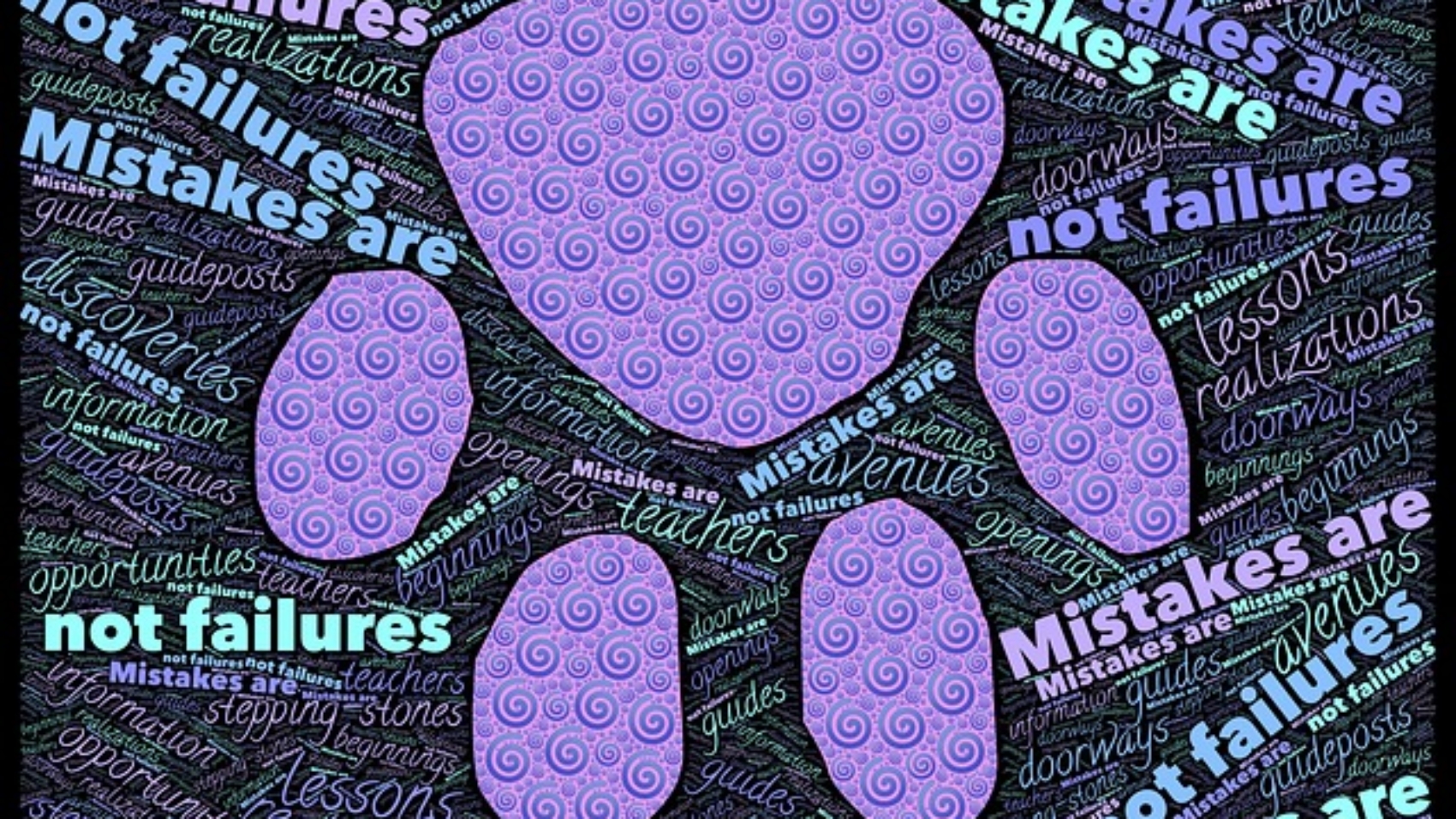
Perfectionists are also unable to tolerate human errors and they see a mistake as a ‘crime’ or being ‘bad’ rather than an opportunity to grow and learn.

According to American author Brene Brown, “People who are walking around as perfectionists are ultimately afraid that the world is going to see them for who they really are and [that] they won’t measure up.”

Tips to Overcome Perfectionism

  • Accept what is: Accept the reality of the situation you are in. And accept your own personal reality and the reality of those you are criticising. Once you accept what is, you will be able to lower your unrealistic standards and set realistic ones.
  • Change your focus from the negative to the positive: Instead of focusing on what is not working in a situation, see what is working. For instance, if you have been critical about your performance on stage, turn your attention to what you did well. This will encourage you to learn from your mistakes and do better next time. You can use this same strategy for evaluating the behaviour of others.
  • Adopt an attitude of forgiveness and compassion: When you forgive yourself and others for making a mistake, you allow yourself to look for solutions rather than staying stuck in negative feelings of guilt and failure.
  • Stop taking life so seriously: Instead of taking life and yourself so seriously, laugh more and have some fun.
  • Take constructive action: Instead of beating yourself up for making a mistake, take action to move forward and achieve your goal.
  • Pursue excellence instead of perfection: Set high standards for yourself by all means but pursue excellence, not perfection. Perfection is negative and keeps you focused on what isn’t working, excellence is positive and focuses on moving forward.
  • Drop the ‘shoulds’ from your life: Ask yourself what you want to do rather than what you should do.

Brene Brown suggests doing a reality check when your inner critic is bombarding you for being a failure. She says you should ask yourself the following questions:

  1. Are my thoughts factual, or are they my interpretations?
  2. Am I jumping to negative conclusions?
  3. Is this situation as bad as I’m making it out to be?
  4. What’s the worst thing that could happen?
  5. Will this matter in five years?

The key to overcoming perfectionism, like with everything else, is to start with small steps and take these steps every day until you break your perfectionist habit and develop a more relaxed and tolerant way of thinking.

smilie-gbe0572310_640

Do You Know How to Have Fun?

This question is a no-brainer you might say but there are countless people out there who are so caught up in the pressures of their daily life that they seem to have forgotten how to have fun.

Fun is an important component of adult life, just like it is for children and adolescents.

So make time for some fun in your life; read a book that makes you laugh out loud, go out for a meal with people who lift your spirits, watch comedies or a stand-up comic act, go dancing, walk along the beach or go shopping if that is your idea of fun. Do whatever it takes to get you into a light-hearted, carefree frame of mind.

Before you can have fun, however, you first need to be aware of what you consider to be fun. For many busy people, this basic self-awareness itself could prove to be a challenge because they may never have stopped to ask themselves what fun means to them. For other serious-minded folk, the belief may be that fun is something they had in childhood and it’s certainly not appropriate or necessary for them as adults.

My suggestion to these people is lighten up before it is too late. Life is not only about stress and pressures and responsibilities and getting ahead and climbing the corporate ladder. It’s also about fun and enjoyment and nurturing your inner child.

So, tune in to your inner voice and find out what fun means to you. And then make sure you get to experience it as often as you can.

resilient-gb7962c2f0_640

‘Tough Times Never Last, But Tough People Do!’

This is the title of a ‘New York Times’ bestselling book that was written back in the 1980s, but its lessons hold true even today.

“Nobody is free from problems. A problem-free life is an illusion—a mirage in the desert. It is a dangerously deceptive perception which can mislead, blind and distract. To pursue a problem-free life is to run after an elusive fantasy; it is a waste of mental and physical energies,” writes the American author Robert H. Schuller who is a televangelist, pastor and motivational speaker.

There is nothing new in this idea you might say, but Schuller’s book makes inspirational reading and provides a useful action plan for coping with troubled times. He says:

  • Every problem has a limited life span and no problem is permanent. Your problem will eventually be resolved just like storms give way to the sun and winter always thaws into springtime.
  • You may not have chosen your problem, but you can choose how to react to it, in a positive or a negative way. You can choose to become stronger and learn from it, or better still turn the problem into an opportunity; alternatively, you can choose to be a victim, and wallow in self-pity.
  • Take action to solve your problem, look for solutions and be patient and persist till you find one. Hang in there till the clouds pass.

Additionally, I would like to suggest that to cope with problems or the ‘downs’ in your life it is essential to build up your ‘armour ‘, your ‘coping toolkit’. And this can best be done when things are going well and you are enjoying the ‘ups’ in your life. To build up your armour and toughen up, be nice to yourself, give yourself small treats and rewards, do your best to enjoy the good times, savour every moment and do not spoil your mood by dwelling on the past or imagining what could go wrong in the future. In other words do not worry, get anxious, be pessimistic and indulge in worst-case-scenario thinking.

If you worry and get anxious when times are good, then when bad times hit you, you will probably not have the emotional strength to cope, and you will quickly collapse like a house of cards. Tough times do need tough people so build up your armour, make deposits in your emotional bank, just like you would build your muscles and train for a marathon.

garbage-cans-gab7829241_640

Beware of Other People’s ‘Garbage’!

Have you ever been an innocent victim of another person’s ill temper? Maybe you were out shopping and the cashier at the supermarket snapped at you for no reason, or your colleague may have flared up during a routine meeting at the office, or even worse, you may be out driving and another driver comes close to hitting your car, and gestures angrily at you, all because you were slow to move when the traffic light turned green.

These are all examples of other people dumping their ‘garbage’ on you.

If you are like most people, your first reaction in any of these situations would be to feel upset and take the other person’s rude behaviour personally. Or you may react by getting angry yourself and retaliating aggressively, giving back what you got.

Either way, you spoil your mood and destroy your peace of mind, possibly for the whole day.

What would be the best way to deal with someone else’s ‘garbage’? I would suggest that you don’t take it personally, shrug it off as the other person’s problem which has absolutely nothing to do with you, and then re-focus on what is important to you.

This important life skill is brilliantly expressed by syndicated columnist and business consultant David J. Pollay in his book ‘The Law of the Garbage Truck’. Pollay says: “Many people are like garbage trucks. They run around full of garbage, full of frustration, full of anger and full of disappointment… as their garbage piles up, they look for a place to dump it. And if you let them, they’ll dump it on you. So when someone wants to dump on you, don’t take it personally. Just smile, wave, wish them well and move on. Believe me, you’ll be happier.”

Remember to follow Pollay’s example next time someone tries to dump their garbage on you. And of course, when you are in a bad mood, find an effective way to de-stress so that you don’t dump your own garbage on others.

getty_sb10069456h-001_351046

Is Your Thinking Stuck in the Past?

The way we think determines our actions and ultimately the life we create for ourselves. Unfortunately for us, a lot of our thinking is based on beliefs and ideas that we may have developed at an earlier stage of our lives; and while we are now older, our thinking may be completely out of tune with our current reality, and still stuck in the past.

With technology rapidly transforming the world we live in, it has become imperative for us to constantly review the beliefs we hold and update them regularly. This is certainly easier said than done since more often than not we aren’t even aware of what we are thinking so how can we possibly change it?

We may be holding on to old limiting beliefs such as, “I am not good with mental maths” or “I will never be successful” or “I can’t speak on stage” or “I am not tech savvy and will never be able to read e-books” which may be caused by some negative incident in your childhood, and may not be true in the present. But even though the reality may be quite different, you may still be convinced that this belief is true, and never test its validity or try out anything new. It may therefore be holding you back from achieving your true potential.

Fixed beliefs from the past are often expressed through the “shoulds”, “musts” and “shouldn’ts” that we use in our daily lives.

To live a fulfilling life, it is crucial to be aware of your current reality and to keep checking in with yourself to ensure that your thinking is valid in the present and not based in the past.

As Dr Phil McGraw, host of the American talk show ‘Dr Phil’ says in his bestselling book “Self Matters: Creating Your Life From The Inside Out”: “It’s time to start moving in a new direction that is grounded in the vibrant here and now, instead of continuing in the old direction that is grounded in a tired, outdated and irrelevant history.”

60129d4befd2274f15e5fe6c-quotes-that-talk-about-individuality-inspire-people-to-be-different

Celebrate Your Individuality!

Many of us look to see what the people around us are doing before we set down our personal goals, plan for the future or just live from day to day. This attitude might be appropriate for children, but as adults do we need to constantly look to others to show us the way?

We are unique individuals and we need to celebrate our individuality, rather than lose ourselves in the herd that is the society we belong to. Og Mandino expresses this idea brilliantly in his book “The Greatest Miracle in the World” when he writes:

“Proclaim your rarity…never in all the 70 billion humans who have walked this planet since the beginning of time has there been anyone exactly like you…never, until the end of time will there be another such as you…You! One of a kind. Rarest of the rare…Why have you valued yourself in pennies when you are worth a king’s ransom…Never do as another. Never imitate…be yourself.”

To be yourself, you need to first be aware of who you are and accept your talents as well as your limitations; follow your heart and listen to your inner voice; and most important of all, have the confidence to follow through. It’s certainly not easy to be different or take a diverse path from your peers, if that is what your heart is telling you to do; but if you do take that path, you just may find the peace, happiness, success and fulfilment that you are seeking.

So don’t let the herd mentality that prevails in our society hold you back from being yourself, from doing what you love, and from chasing after your dreams. Celebrate who you are in your entirety — and accept your good as well as your not-so-good qualities.

guilty-gce0d35485_640

Stop Feeling Guilty — You Couldn’t Do Better
Because You Didn’t Know Better

A significant part of the emotional baggage that we all carry around with us is related to guilt. Guilt due to an error of judgement, guilt from saying or doing the wrong thing, guilt because of putting ourselves first, guilt from having more than others, guilt from hurting someone’s feelings, the list goes on and on.

The dictionary defines guilt as a “feeling of responsibility or remorse for some offense, crime, wrong, etc., whether real or imagined.” For most of us who are holding on to feelings of guilt, isn’t the burden we are carrying around with us less about committing an offense or a crime and more just about human errors of judgement, making mistakes, and being limited by our knowledge, our way of thinking, our personal characteristics and our experience?

Is it fair to blame ourselves for doing badly in an interview when despite our best efforts, we didn’t have the personality to impress? Or despite being smart and capable, we couldn’t get along with the boss and therefore lost the job? Or, though we were well meaning, we gave advice to a loved one that may have led them to an undesired outcome. Unfortunately, we tend to believe that we should always know it all and always do right; we hold ourselves to such high standards that if we don’t meet them, we are consumed with guilt, unable to forgive ourselves, and determined to punish ourselves.

Guilt can become so extreme, that we may even feel guilty about being happy and enjoying ourselves, feeling that we don’t deserve it.

To be guilt-free and therefore at peace, we need to be compassionate and forgive ourselves for our lapses. We need to tell ourselves, as prominent American poet and author Maya Angelou reminds us, “If I’d known better I’d have done better”.

giant-crape-myrtle-g3da4c7937_1920

We Were Never Meant To Be Perfect!

Below is an inspirational message from the Daily Om website (www.dailyom.com) which I wanted to share. It reminds us that we would be so much happier and more peaceful if we just gave up the pursuit of perfection because ultimately we are here to learn, and if we were perfect, we would know it all so what learning would there be. The last line says it all: “Imperfection is inherent to being human; by embracing your imperfections, you embrace yourself”.

“Life becomes much more interesting once we let go of our quest for perfection and aspire for imperfection instead.”

It is good to remember that one of our goals in life is to not be perfect. We often lose track of this aspiration. When we make mistakes, we think that we are failing or not measuring up. But if life is about experimenting, experiencing, and learning, then to be imperfect is a prerequisite. Life becomes much more interesting once we let go of our quest for perfection and aspire for imperfection instead.

This doesn’t mean that we don’t strive to be our best. We simply accept that there is no such thing as perfection—especially in life. All living things are in a ceaseless state of movement. Even as you read this, your hair is growing, your cells are dying and being reborn, and your blood is moving through your veins. Your life changes more than it stays the same. Perfection may happen in a moment, but it will not last because it is an impermanent state. Trying to hold on to perfection or forcing it to happen causes frustration and unhappiness.

In spite of this, many of us are in the habit of trying to be perfect. One way to nudge ourselves out of this tendency is to look at our lives and notice that no one is judging us to see whether or not we are perfect. Sometimes, perfectionism is a holdover from our childhood—an ideal we inherited from a demanding parent. We are adults now, and we can choose to let go of the need to perform for someone else’s approval. Similarly, we can choose to experience the universe as a loving place where we are free to be imperfect. Once we realize this, we can begin to take ourselves less seriously and have more fun. Imperfection is inherent to being human. By embracing your imperfections, you embrace yourself.

traffic-signs-g2bc77bf8e_640

Letting Go of Expectations

When it comes to interpersonal relationships, whether they involve a friend, a partner or a family member, we may find ourselves having expectations which are not met. Or conversely, we may not be able to live up to the expectations of others. These unmet expectations may cause us minor disappointment which can be easily shrugged off, or they could go deeper and cause emotional wounds which could cause irrevocable damage to the relationship.

Expectations are an inevitable part of human relationships, based as they are on each person’s unique way of thinking, his/her belief and value systems, and socialisation. What one person may think is appropriate behaviour in a particular situation, may not be considered appropriate by another person. Also, what one person thinks should be done in a particular situation, may not even occur to another person even though they may have the best intentions. Unless two people have the exact same way of thinking, or a deep understanding of each other, they will find themselves dealing with unmet expectations sooner or later.

Since we have no real control over another person, our best course of action would be to make a conscious effort to scale down our expectations of others. This way, we will avoid hurt and disappointment, and enhance the joy element in our lives.

Instead, we could focus on what we can control, which is ourselves, and try to meet our own expectations of ourselves. If we aim to live our best lives, constantly learning and growing, doing better than what we did yesterday, a week ago, or a year ago, won’t we be happier and more fulfilled? And if we are happier, peaceful and more fulfilled, some of our positive energy may rub off on the people in our lives, and there will be greater joy all around. Certainly, a win-win situation for all concerned.

vintage-g65de2f062_640

Why Compare? You Don’t Need to Be Like Anyone Else

Why do we constantly compare ourselves with the people around us? It’s such a diminishing habit because it usually leaves us feeling bad about ourselves, ‘less than’ the person we are comparing with and more insecure than ever. And frankly is it even necessary to compare? Is life a race where it is a requirement to compare running speeds and best timings? Are we in a perpetual competition or contest, every day of our lives, where we feel we have to outdo everyone else around us?

Besides, what do we get out of beating others? A false sense of superiority that is short-lived at best.

What would life be like if we decided not to compare with anyone but ourselves instead? If we just focused on outperforming ourselves, improving on our previous best, scoring higher in the next test or exam, or running a faster race?

I do believe that life would be so much happier if we only had to contend with ourselves and not numerous other people whose efforts and talents we have no control over.

We can begin at this very moment to run our own race instead of a universal race where we are running against other people; to work at our best and to pursue excellence at every step instead of looking to others to set standards that we need to measure up to. To do this we first need to be aware of our strengths and limitations and to accept them wholeheartedly, without feeling small or ‘less than’ in any way. Then we need to set realistic goals, based on what we are good at, and we need to pursue these goals single-mindedly, with focus, passion and discipline.

If we strive to be the best version of ourselves, we will live up to our true potential and have a joyous life too.